Espresso and Beer


I've been a home brewer for many years and am also very interested in coffee, brewed coffee and espresso. The parallels between producing a quality beer and a quality cup are striking. Both types of brewing share many factors, mineral content of the brewing water, origin of the raw materials (malt & coffee), roasting of the malt/coffee, blending of the malt/coffee, grinding of the malt/coffee, and extraction from the malt/coffee. Temperature, staling, oxidation, are also factors common to both types of brewing.

Just as most person's first experience with beer is the tasteless swill produced by the world's mega-breweries, so is their first experience with espresso likely to be a burnt, bitter mega-chain brew. In fact this put me off espresso for many years. Not being a milk fan, I found most straight espresso to be a hellish jolt of nearly unpalatable bitter essence. As I have learned, beer need not be insipid, and espresso need not be bitter.

The brewing of espresso and beer share additional similarities than those for brewed coffee. Espresso in the cup is analogous to kettle runnings draining from the lauter tun. Of course the volumes are vastly different. A typical batch of homebrew uses about 10 lbs of malt. A typical double shot uses about 14 grams of coffee. Although that is more than a difference factor of 300, both process share much in common. In both types of brewing this extraction process is concerned with temperature profile, water content, and the physics of moving liquid through a porous filter bed.

Both types of brewing start with a vegatable product - seeds. Both need the seeds to be crushed/ground/shredded. Both require a temperature dependent water infusion. Both are concerned with the extraction of the "right stuff" and the non-extraction of the "wrong stuff". Both seek to avoid oxidation and the formation of process related off flavors. Both produce a fleeting product and experience. Beer and espresso brewing are very similar though with different timelines. The timeline for brewing beer is measured in hours, the timeline for brewing espresso is measured in seconds.


The Water

According to the Specialty Coffee Association of America's golden cup brewing standards, a brewed cup of coffee is 98.5% water. Beer is often 4-5% by weight or volume alcohol, and perhaps 3% flavor components, hence beer is well above 90% water. As such water quality and mineral content is very important to both types of brewing.

Highly mineral water will reduce the extraction of coffee's essential oils and flavor components, and water with too few minerals will extract unwanted flavor components from the bean. Coffee, both brewed and espresso, should use water with about 150 ppm total dissolved solids. Water composition has not been studied as extensively in the coffee world as it has been in the beer world. The coffee extraction effects of the different kinds of water hardness is unknown in the coffee world and so the crude measure of TDS (total dissolved solids) is used. Coffees brewed with very soft water may be sour as too many unwanted organic acids and tannins are extracted. On the other hand, coffees brewed with very hard water may be weak and lack important flavor constituents.

Beer brewing, as an industrial enterprise, has been studied for centuries, and the effects of various ions on the brewing process are well known. Pilsners and Kolsch styles of beer are best brewed with exceedingly soft water. These beer styles arose in the mountain regions of Germany where the water is very soft. English bitters, on the other hand, are best brewed with hard water, approximating the water from the wells around the Burton-upon-Trent region of England where these beers arose. The effects of calcium, magnesium, sodium, chloride, carbonate, bicarbonate, and other ions are all well studied as it relates to every aspect of the beer brewing process. For example, calcium at the level of 50-100 ppm is very beneficial to the enzymatic reactions that convert the starch in barley malt to sugar, and, sulphates are very important to give hop flavor compounds a dry edge in English Extra Special Bitters and India Pale Ales.

Careful attention to the brewing water composition for both types of brewing is very important.


The Raw Materials

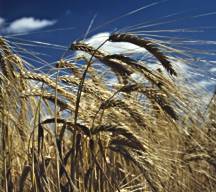
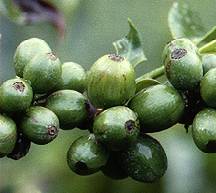
Beer begins as barley seed. The barley is wetted and allowed to sprout for a few days, then kiln dried and roasted to varying degrees depending upon the results desired. The sprouted, dried, roasted barley is called malt. Malts range from the lightest Pilsner malt to the darkest chocolate or black malt. Barley is basically a hunk of starch surrounded by a paperlike leaf, the husk. Sprouting causes certain enzymes (amylases) to be synthesized by the plant embryo, and these enzymes are then preserved to varying extents by the drying and kilning process. These enzymes are necessary to convert starch to sugar later in the brewing process. Some types of malt are even induced to convert their starch to sugar during the malting process. The dried and roasted result is a sweet, sugary nugget, rich with toasted caramels. There are Caramel malts and Crystal malts (the sugar is allowed to actually crystalize in the husk), Biscut malts and Toasted malts. Malt types can be organized into a simple 2D matrix, with increasing sugar content along one axis and increasing roast along the other.   Coffee begins as coffee "cherries". When mature the coffee tree's small oval berries are about the color and size of a small cherry. Inside the skin and pulp are nestled two coffee beans with their flat sides together. In the coffee mill the cherries are skinned and depulped. the cherries are separated from the skin, leaving the skinless berry, still covered by a slimey mucilage and the hull. Most of the pulpy covering is removed from the bean before it is dried. This leaves the beans covered with a slimey mucilagenous substance. The beans are soaked in water, transferred to fermentation bins where natural enzymes digest and separate this slimey layer from the bean. Next, the coffee is washed in clean, clear water, removing the softened slime, and then dried, either by the sun in open terraces, or in large mechanical dryers. Dried coffee is greenish-blue and contains about 12% water. This leaves two last thin layers covering the bean, the parchment or pergamino and the silver skin. Most often a machine called a huller is used to rub these layers off.
The Roast

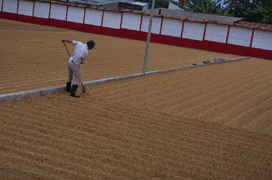
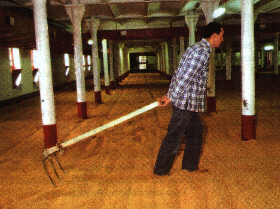
On the left we have floor malting barley and on the right we have drying coffee. Note the use of the same techniques and tools. Both use rakes, and first row the material one way, then at a right angle the other way.


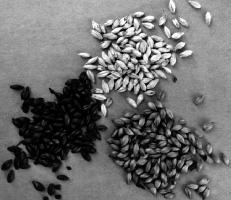
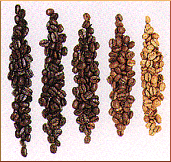
  Different malts, showing a light Pale or Lager malt, a more roasted Crystal malt, and a darkly roasted Black or Chocolate malt.   Different Italian coffee roasts. The center is a fine Milano espresso roast, the next darker is from Florence, and the darkest is from Naples with its oily or greasy sheen.


The Blend

  Malts are blended in the exact same way that coffee is blended. If you are brewing a Pilsner, your malt blend may be extremely simple, perhaps 95% very light german malt, and 5% of a lightly toasted malt. If you are brewing an English bitters, your malt blend may be 70% english light malt, 10% moderate caramel malt, 10% moderate crystal malt, and 10% biscut malt. I've brewed beers composed of a single malt and I brewed beers with 6 different malts. Every brewery uses its own malt blends, called a "grain bill" for each of the beers brewed. For example the grain bill for RedHook Blonde Ale includes 6 different malts, 2-row Klages, Caramel, Munich, Carapils, Caravienna, and malted wheat. Malted wheat increases head formation and retention.   There are 2 species of coffee, Coffea arabica, highland hard bean coffee, and Coffea robusta, lowland soft bean coffee. Generally arabica is the more highly prized and expensive of the two, though the best estate robusta can rival the best arabica price. Depending on usage, whether drip, pressed, or espresso, coffee blends differ widely. Vivace Espresso in Seattle uses 4 coffees in it's blend, 3 arabicas (all mild, sweet, low-acidity) and 14% estate robusta. The robusta increases crema formation and retention.


The Crush

  Malt is a hard dry seed. To access the goodness in the seed malt is crushed. Malt milling is a preceision process with differing results depending on the technology used. Malt is a starch or sugar nugget encased in a dried leaf husk. The "right stuff" is in the nugget, the "wrong stuff" is in the husk. The husk contains lots of tannins - astringent, tea-like compounds not desirable in beer. The goal of malt crushing is to crush the nugget into uniform pieces, but leave the husk intact. Such a crush can be attained by passing the malt through a roller mill in which the malt is forced between 2 or more rollers separated by a distance smaller than the malt kernels. Some roller mills also incorporate a sizing screen. Those pieces retained by the screen are either routed through the mill again or diverted to an auxillary set of rollers.   Coffee is a hard dry seed. To access the goodness in the seed coffee is ground. Coffee grinding is a preceision process with differing results depending on the technology used. Coffee ground with a blade grinder is rarely suitable for quality espresso. Coffee ground with a conical burr grinder will differ in its performance from coffee ground with parallel burrs. The best coffee grinders actually shave the coffee beans into uniform bits.


Whole malt will stale just as coffee does, though slower. Crushed malt will stale MUCH faster than whole malt, in just a matter of days. The enemies of both malt and coffee are heat, oxygen, and humidity, Just as baritas have found with coffee, brewmasters crush their malt immediately before use. Their time lag is not seconds as it should be with coffee, but minutes or hours since quantities range from a few pounds to a few hundred pounds.

The Infusion

Mashing is the process by which malt is infused with hot water, and the starch converting enzymes are allowed to work their magic to create sugar. Mashing is a temperature precision process. Brewmasters attempt to hit their target temperatures to within 1 F or less and to maintain that temperature for an hour or more. Mashing starts with a calculation of how much water at what temperature to mix with the malt to attain the target mash temperature. The target mash temperature is determined by the desired characteristics of the beer. A pale, dry beer, with little residual sweetness uses a lower mash temperature (say 149F), than a robust, malty, chewy brew (say 156F). Note that a difference of just 7F can greatly change the resulting character of the beer. In fact overshooting a mash temperature into the 160s F will trash a beer. Your findings that a +- 5F variation in infusion temperature will greatly and adversely affect espresso comes as no surprise to me. In a typical batch of homebrew, 10 pounds of room temperature malt is added to about 3.5 gallons of water at about 165F to attain a 152F mash. Just as coffee needs a "pre-infusion" to wet the cake, so malt is "doughed-in" to prevent the formation of grain balls. Grain balls are globs of malt, wet on the outside but dry on the inside - like dumplings. Dry malt is wasted malt, so the malt is added slowly, with gentle stirring, to the water. I suspect that the pre-infusion used for espresso serves that same purpose. By gently wetting the coffee first, it is allowed to swell and seal itself in the filter, and it is uniformly wetted, preventing the formation of dry pockets which waste coffee and can induce channeling. The entire mash could be viewed as a long pre-infusion during which time the good stuff is created and loosened from the malt. During the mash the malt may be gently stirred, but great care is taken not to splash nor agitate so as not to incorporate any air into the mash. Any time that temperatures are elevated one risks oxidation if air is introduced to the mash. In brewing this is called "hot-side aeration" (HSA) and it is to be avoided. HSA will impart a "cardboard" flavor to the brew and greatly reduce shelf-life.

Sparging

Once the mash sugars are created and loosened they must be removed from the grain bed. Sparging is generally accomplished by adding hot water (170F) to the top of the mash vessel (tun) while draining the liquid (wort) from the bottom of the tun. Again the similarity to espresso is striking. One cannot just open the spigot and have the wort drain well with a good, efficient extraction. Just as the barista carefully packs the coffee into the portafilter, so the brewmaster must carefully establish a properly packed grain bed through recirculation. Remember the mash tun contains 10 pounds of grain in 3-4 gallons of water. The goal is to have the grain compact to form an efficient filter through which perhaps 8-10 gallons of liquid will be passed in about 45-60 minutes. The careful establishment of the grain bed seals it against the tun walls so the water simply does not go around the grain. It also prevents the formation of channels in the grain bed, yet maintains the proper porosity so as to avoid the dreaded "stuck sparge". The grain bed is established by slowly running liquid out the bottom of the tun and then returning it to the top of the tun. This gentle recirculation compacts the grain to the proper density, draws off the errant grains and particulates, clearing the wort, and loosens the extract even more. After 1-3 gallons is recirculated the tun is allowed to drain at the same rate as fresh hot water is added to the top of the tun. Once again the spigot is not simply opened all the way and the wort allowed to splash violently into the receiving vessel. Oh no, the wort is treated gently, lovingly, to avoid oxidation. It is generally drawn off through tubing or piping and introduced to the receiving vessel under the surface of the previously collect wort. Just as the proper rate of the pour is essential to good espresso so is the sparge rate to quality beer. The flow rate is tuned by experience to maximize sugar extraction and minimize tannin extraction. Too fast of a sparge will yield an inefficient extraction and could promote channeling. Too slow of a sparge will yield more oxidation and more extraction of tannins from the grain husks. The resulting beer may have a tea-like astringency. I think pushing a sparge too long is akin to pouring too large of an espresso yielding a thin, white, or streaky crema.

Oxidation

The similarities largely end at this point in the brewing process. The espresso is poured, but the sweet wort still has to go through a boil, hop additions, a fermentation, then bottling or kegging. I could try to push an analogy between the use of milk in espresso and the use of hops in beer, but it would serve no purpose. I've also ignored the issue of the mineral content of the brewing water, extremely important to both types of brewing. Thoughout the rest of the beer brewing process the minimization of oxidation is of primary concern. After fermentation the receiving vessels for the green beer are often purged with CO2 to displace air and prevent oxidation. Might an airtight coffee grinding chamber purged with CO2 or nitrogen improve the espresso? The violence of the grinding process in an oxygen containing chamber obviously promotes oxidation. This must be the primary source of oxidation for an operation that correctly manages its coffee stock. I can envision a grinder in which a pound or two of positive CO2 pressure was maintained in the grinding chamber. Each dose would vent a bit of CO2 during extraction of the ground coffee to be replaced from a tank. This seems quite doable to me. My experience with CO2 used during the beer brewing process leads me to wildly guess that a 20 lb tank of CO2 (perhaps $30 refill charge) would last a single grinder weeks. Precise calculations could be easily made given the volume of the CO2 loss per dose.